
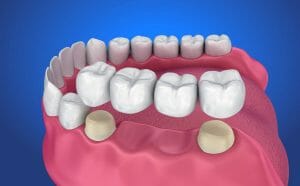
 A Dental Bridge Literally Bridges the Gap Between Teeth
A bridge may be the best solution when you are missing one or more teeth.
A bridge uses the surrounding healthy teeth, known as abutments, to support the false replacement tooth or teeth, called a pontic. Abutments, which are your healthy teeth, will require crowns in order to stabilize them and make them strong enough to support the pontic.
To place the crowns, a layer of tooth enamel is removed to provide a snug fit for the crown that is then placed over the tooth. Once this is done, you are ready for your new bridge.
The number of crowns you need will all depend on how many teeth you are missing.
Just one missing tooth means you will need three crowns to support your bridge – two pontics and one abutment. Together, they will create a three-unit bridge.
To determine the best course of action for your situation, Dr. Hicks and team will consider:
- How many teeth are missing
- The location of missing teeth
- The amount of support given from each abutment tooth
- The amount of bone left below the surface in the root
- The size and length of the root for each tooth
Your bridgework will likely be split between two appointments. Your custom bridge will be made in our on-site laboratory based on 3D images of your mouth that we capture during your first appointment.
We will give you a temporary bridge while your permanent one is being made. At your second appointment, we will cement your permanent bridge into place. Anesthesia will be provided to minimize any discomfort.
After you receive your bridge, expect a short adjustment period. After a few days, you should feel comfortable with the bridge.
One of the best ways to care for your dental bridge is to keep your remaining teeth healthy and strong. With good oral hygiene, you can keep your dental bridge for 5 to 10 years. Our team will review with you an at-home routine to keep your bridge healthy. We also may ask you to come in for follow-up appointments to ensure that your bridge is working properly.
IMG_PLACEHOLDERDental Bridges for Missing Teeth Restoration
Missing teeth can affect more than appearance. Gaps in your smile can change how your bite functions, place extra stress on surrounding structures, and cause neighboring teeth to shift out of position. At Hicks Family Dental, dental bridges in Lititz, PA, are designed to restore stability, improve chewing function, and support long-term oral health.
A dental bridge replaces one or more missing teeth by anchoring an artificial tooth to the adjacent teeth on either side of the gap. These supporting teeth, known as abutment teeth, help stabilize the restoration while the pontic (false tooth) fills the open space.
Replacing missing teeth early helps preserve alignment, maintain jaw balance, and protect overall oral health while supporting natural teeth and surrounding structures.
Understanding Dental Bridges and Their Purpose
Dental bridges restore missing teeth by using nearby teeth for support.
When a tooth is lost, surrounding teeth often begin shifting toward the gap. Over time, this movement can affect bite alignment, create uneven pressure, and make daily oral hygiene more difficult. Bone beneath the missing tooth may also shrink due to a lack of stimulation.
Replacing the missing tooth helps maintain proper alignment, restore chewing function, and support long-term oral health.
Types of Dental Bridges Available
There are several types of bridges, each designed for specific situations.
- Traditional bridge – the most common type, supported by crowns on adjacent teeth
- Cantilever bridge – used when support is available on only one side of a gap
Maryland dental bridge – uses a porcelain framework with metal wings bonded to the back of adjacent teeth, often for front teeth.
Each type of dental bridge is selected based on the location of the missing tooth, the condition of surrounding teeth, and overall dental health.
Benefits of Dental Bridges
Dental bridges provide both functional and structural advantages.
Common benefits include:
- Restoring chewing ability
- Maintaining alignment of surrounding teeth
- Preventing shifting into the gap
- Improving speech clarity
- Supporting facial structure
- Enhancing smile appearance
By restoring the sides of the gap, bridges help distribute bite pressure more evenly and support overall dental health.
Overview of the Dental Bridge Procedure
The dental bridge procedure involves preparing the supporting teeth to anchor the restoration.
A small amount of enamel is reshaped on the abutment teeth so crowns can fit securely. Digital impressions of your teeth are captured to create a precise model of your bite.
A temporary bridge may be placed while the final restoration is fabricated. Once ready, the final bridge is secured using dental cement, restoring both function and appearance.
What to Expect During the Treatment Process
Dental bridges are typically completed over two visits.
During the first appointment, the supporting teeth are prepared,d and an impression of your teeth is taken. This ensures the restoration fits properly within your bite and aligns with surrounding structures.
A temporary bridge protects the prepared teeth while the final restoration is created. During the second visit, the permanent bridge is placed and adjusted for proper fit.
Determining Candidacy for Dental Bridges
Dental bridges are recommended for patients who:
- Are missing one or more teeth
- Have healthy adjacent teeth in good condition
- Maintain good oral hygiene
- Have sufficient support for the restoration
The condition of the abutment teeth and surrounding gum tissue plays an important role in long-term success.
Comparing Dental Bridges and Implants
Dental bridges and dental implants are both effective solutions for replacing missing teeth, but they function differently.
A bridge relies on adjacent teeth for support, while implants replace the tooth root and are placed into the jawbone through oral surgery. Bridges often provide a faster solution, while implants help preserve bone structure.
The right treatment depends on your goals, bone condition, and overall oral health.
Dental Bridges as an Alternative to Implants
Dental bridges are often a practical option when implants are not ideal due to bone loss, cost considerations, or treatment time. Because bridges do not require oral surgery, they can restore function more quickly.
Implants may still be recommended in certain cases where long-term bone preservation is a priority. An evaluation helps determine the most appropriate replacement option.
Risks of Leaving Missing Teeth Untreated
Leaving a missing tooth untreated can lead to long-term complications.
Adjacent teeth may shift into the space, affecting alignment and increasing the risk of uneven wear. This can also make certain areas harder to clean, raising the likelihood of tooth decay and gum disease.
Bone loss beneath the missing tooth can occur over time, which may impact jaw stability.
Longevity and Expected Results
Dental bridges are designed to provide reliable function for many years.
Most bridges last between five and ten years, though many last longer with proper care. Longevity depends on the health of supporting teeth, daily habits, and regular dental visits.
Maintaining a consistent oral care routine helps preserve both the restoration and the surrounding structures.
Safety and Potential Risks
Dental bridges are considered a safe and effective restorative option.
However, the success of the bridge depends on the health of the supporting teeth. Issues such as gum disease or tooth decay can affect stability over time.
Routine checkups and proper care help reduce the risk of complications.
Cost and Insurance Considerations
The cost of treatment varies depending on the number of teeth being replaced and the complexity of the case.
Many dental insurance plans provide partial coverage for bridges. Flexible payment options may also be available to help manage costs.
Discussing your options during your consultation helps determine the most appropriate plan.
Aftercare and Long-Term Maintenance
Maintaining a bridge requires consistent care.
Patients should:
- Brush twice daily
- Use floss threaders or specialized tools to clean beneath the bridge
- Maintain regular dental visits
- Avoid excessive pressure on the restoration
A strong oral care routine helps protect the supporting teeth and extend the life of the bridge.
Schedule Your Appointment
Dental bridges restore missing teeth and help maintain balance in the bite.
If you are missing one or more teeth, Hicks Family Dental provides personalized restorative solutions designed to rebuild your smile and improve function.
Contact our Lititz, PA office today to schedule your consultation.
Dental Bridges FAQ
Most last between five and ten years with proper care.
Local anesthetic helps keep the procedure comfortable.
Typically completed over two visits.
Yes, after a short adjustment period.
Daily brushing, flossing, and regular checkups help maintain stability.
IMG_PLACEHOLDERDental Bridges for Missing Teeth Restoration
Missing teeth can affect more than appearance. Gaps in your smile can change how your bite functions, place extra stress on surrounding structures, and cause neighboring teeth to shift out of position. At Hicks Family Dental, dental bridges in Lititz, PA, are designed to restore stability, improve chewing function, and support long-term oral health.
A dental bridge replaces one or more missing teeth by anchoring an artificial tooth to the adjacent teeth on either side of the gap. These supporting teeth, known as abutment teeth, help stabilize the restoration while the pontic (false tooth) fills the open space.
Replacing missing teeth early helps preserve alignment, maintain jaw balance, and protect overall oral health while supporting natural teeth and surrounding structures.
Understanding Dental Bridges and Their Purpose
Dental bridges restore missing teeth by using nearby teeth for support.
When a tooth is lost, surrounding teeth often begin shifting toward the gap. Over time, this movement can affect bite alignment, create uneven pressure, and make daily oral hygiene more difficult. Bone beneath the missing tooth may also shrink due to a lack of stimulation.
Replacing the missing tooth helps maintain proper alignment, restore chewing function, and support long-term oral health.
Types of Dental Bridges Available
There are several types of bridges, each designed for specific situations.
- Traditional bridge – the most common type, supported by crowns on adjacent teeth
- Cantilever bridge – used when support is available on only one side of a gap
Maryland dental bridge – uses a porcelain framework with metal wings bonded to the back of adjacent teeth, often for front teeth.
Each type of dental bridge is selected based on the location of the missing tooth, the condition of surrounding teeth, and overall dental health.
Benefits of Dental Bridges
Dental bridges provide both functional and structural advantages.
Common benefits include:
- Restoring chewing ability
- Maintaining alignment of surrounding teeth
- Preventing shifting into the gap
- Improving speech clarity
- Supporting facial structure
- Enhancing smile appearance
By restoring the sides of the gap, bridges help distribute bite pressure more evenly and support overall dental health.
Overview of the Dental Bridge Procedure
The dental bridge procedure involves preparing the supporting teeth to anchor the restoration.
A small amount of enamel is reshaped on the abutment teeth so crowns can fit securely. Digital impressions of your teeth are captured to create a precise model of your bite.
A temporary bridge may be placed while the final restoration is fabricated. Once ready, the final bridge is secured using dental cement, restoring both function and appearance.
What to Expect During the Treatment Process
Dental bridges are typically completed over two visits.
During the first appointment, the supporting teeth are prepared,d and an impression of your teeth is taken. This ensures the restoration fits properly within your bite and aligns with surrounding structures.
A temporary bridge protects the prepared teeth while the final restoration is created. During the second visit, the permanent bridge is placed and adjusted for proper fit.
Determining Candidacy for Dental Bridges
Dental bridges are recommended for patients who:
- Are missing one or more teeth
- Have healthy adjacent teeth in good condition
- Maintain good oral hygiene
- Have sufficient support for the restoration
The condition of the abutment teeth and surrounding gum tissue plays an important role in long-term success.
Comparing Dental Bridges and Implants
Dental bridges and dental implants are both effective solutions for replacing missing teeth, but they function differently.
A bridge relies on adjacent teeth for support, while implants replace the tooth root and are placed into the jawbone through oral surgery. Bridges often provide a faster solution, while implants help preserve bone structure.
The right treatment depends on your goals, bone condition, and overall oral health.
Dental Bridges as an Alternative to Implants
Dental bridges are often a practical option when implants are not ideal due to bone loss, cost considerations, or treatment time. Because bridges do not require oral surgery, they can restore function more quickly.
Implants may still be recommended in certain cases where long-term bone preservation is a priority. An evaluation helps determine the most appropriate replacement option.
Risks of Leaving Missing Teeth Untreated
Leaving a missing tooth untreated can lead to long-term complications.
Adjacent teeth may shift into the space, affecting alignment and increasing the risk of uneven wear. This can also make certain areas harder to clean, raising the likelihood of tooth decay and gum disease.
Bone loss beneath the missing tooth can occur over time, which may impact jaw stability.
Longevity and Expected Results
Dental bridges are designed to provide reliable function for many years.
Most bridges last between five and ten years, though many last longer with proper care. Longevity depends on the health of supporting teeth, daily habits, and regular dental visits.
Maintaining a consistent oral care routine helps preserve both the restoration and the surrounding structures.
Safety and Potential Risks
Dental bridges are considered a safe and effective restorative option.
However, the success of the bridge depends on the health of the supporting teeth. Issues such as gum disease or tooth decay can affect stability over time.
Routine checkups and proper care help reduce the risk of complications.
Cost and Insurance Considerations
The cost of treatment varies depending on the number of teeth being replaced and the complexity of the case.
Many dental insurance plans provide partial coverage for bridges. Flexible payment options may also be available to help manage costs.
Discussing your options during your consultation helps determine the most appropriate plan.
Aftercare and Long-Term Maintenance
Maintaining a bridge requires consistent care.
Patients should:
- Brush twice daily
- Use floss threaders or specialized tools to clean beneath the bridge
- Maintain regular dental visits
- Avoid excessive pressure on the restoration
A strong oral care routine helps protect the supporting teeth and extend the life of the bridge.
Schedule Your Appointment
Dental bridges restore missing teeth and help maintain balance in the bite.
If you are missing one or more teeth, Hicks Family Dental provides personalized restorative solutions designed to rebuild your smile and improve function.
Contact our Lititz, PA office today to schedule your consultation.
Dental Bridges FAQ
Most last between five and ten years with proper care.
Local anesthetic helps keep the procedure comfortable.
Typically completed over two visits.
Yes, after a short adjustment period.
Daily brushing, flossing, and regular checkups help maintain stability.
IMG_PLACEHOLDERDental Bridges for Missing Teeth Restoration
Missing teeth can affect more than appearance. Gaps in your smile can change how your bite functions, place extra stress on surrounding structures, and cause neighboring teeth to shift out of position. At Hicks Family Dental, dental bridges in Lititz, PA, are designed to restore stability, improve chewing function, and support long-term oral health.
A dental bridge replaces one or more missing teeth by anchoring an artificial tooth to the adjacent teeth on either side of the gap. These supporting teeth, known as abutment teeth, help stabilize the restoration while the pontic (false tooth) fills the open space.
Replacing missing teeth early helps preserve alignment, maintain jaw balance, and protect overall oral health while supporting natural teeth and surrounding structures.
Understanding Dental Bridges and Their Purpose
Dental bridges restore missing teeth by using nearby teeth for support.
When a tooth is lost, surrounding teeth often begin shifting toward the gap. Over time, this movement can affect bite alignment, create uneven pressure, and make daily oral hygiene more difficult. Bone beneath the missing tooth may also shrink due to a lack of stimulation.
Replacing the missing tooth helps maintain proper alignment, restore chewing function, and support long-term oral health.
Types of Dental Bridges Available
There are several types of bridges, each designed for specific situations.
- Traditional bridge – the most common type, supported by crowns on adjacent teeth
- Cantilever bridge – used when support is available on only one side of a gap
Maryland dental bridge – uses a porcelain framework with metal wings bonded to the back of adjacent teeth, often for front teeth.
Each type of dental bridge is selected based on the location of the missing tooth, the condition of surrounding teeth, and overall dental health.
Benefits of Dental Bridges
Dental bridges provide both functional and structural advantages.
Common benefits include:
- Restoring chewing ability
- Maintaining alignment of surrounding teeth
- Preventing shifting into the gap
- Improving speech clarity
- Supporting facial structure
- Enhancing smile appearance
By restoring the sides of the gap, bridges help distribute bite pressure more evenly and support overall dental health.
Overview of the Dental Bridge Procedure
The dental bridge procedure involves preparing the supporting teeth to anchor the restoration.
A small amount of enamel is reshaped on the abutment teeth so crowns can fit securely. Digital impressions of your teeth are captured to create a precise model of your bite.
A temporary bridge may be placed while the final restoration is fabricated. Once ready, the final bridge is secured using dental cement, restoring both function and appearance.
What to Expect During the Treatment Process
Dental bridges are typically completed over two visits.
During the first appointment, the supporting teeth are prepared,d and an impression of your teeth is taken. This ensures the restoration fits properly within your bite and aligns with surrounding structures.
A temporary bridge protects the prepared teeth while the final restoration is created. During the second visit, the permanent bridge is placed and adjusted for proper fit.
Determining Candidacy for Dental Bridges
Dental bridges are recommended for patients who:
- Are missing one or more teeth
- Have healthy adjacent teeth in good condition
- Maintain good oral hygiene
- Have sufficient support for the restoration
The condition of the abutment teeth and surrounding gum tissue plays an important role in long-term success.
Comparing Dental Bridges and Implants
Dental bridges and dental implants are both effective solutions for replacing missing teeth, but they function differently.
A bridge relies on adjacent teeth for support, while implants replace the tooth root and are placed into the jawbone through oral surgery. Bridges often provide a faster solution, while implants help preserve bone structure.
The right treatment depends on your goals, bone condition, and overall oral health.
Dental Bridges as an Alternative to Implants
Dental bridges are often a practical option when implants are not ideal due to bone loss, cost considerations, or treatment time. Because bridges do not require oral surgery, they can restore function more quickly.
Implants may still be recommended in certain cases where long-term bone preservation is a priority. An evaluation helps determine the most appropriate replacement option.
Risks of Leaving Missing Teeth Untreated
Leaving a missing tooth untreated can lead to long-term complications.
Adjacent teeth may shift into the space, affecting alignment and increasing the risk of uneven wear. This can also make certain areas harder to clean, raising the likelihood of tooth decay and gum disease.
Bone loss beneath the missing tooth can occur over time, which may impact jaw stability.
Longevity and Expected Results
Dental bridges are designed to provide reliable function for many years.
Most bridges last between five and ten years, though many last longer with proper care. Longevity depends on the health of supporting teeth, daily habits, and regular dental visits.
Maintaining a consistent oral care routine helps preserve both the restoration and the surrounding structures.
Safety and Potential Risks
Dental bridges are considered a safe and effective restorative option.
However, the success of the bridge depends on the health of the supporting teeth. Issues such as gum disease or tooth decay can affect stability over time.
Routine checkups and proper care help reduce the risk of complications.
Cost and Insurance Considerations
The cost of treatment varies depending on the number of teeth being replaced and the complexity of the case.
Many dental insurance plans provide partial coverage for bridges. Flexible payment options may also be available to help manage costs.
Discussing your options during your consultation helps determine the most appropriate plan.
Aftercare and Long-Term Maintenance
Maintaining a bridge requires consistent care.
Patients should:
- Brush twice daily
- Use floss threaders or specialized tools to clean beneath the bridge
- Maintain regular dental visits
- Avoid excessive pressure on the restoration
A strong oral care routine helps protect the supporting teeth and extend the life of the bridge.
Schedule Your Appointment
Dental bridges restore missing teeth and help maintain balance in the bite.
If you are missing one or more teeth, Hicks Family Dental provides personalized restorative solutions designed to rebuild your smile and improve function.
Contact our Lititz, PA office today to schedule your consultation.
Dental Bridges FAQ
Most last between five and ten years with proper care.
Local anesthetic helps keep the procedure comfortable.
Typically completed over two visits.
Yes, after a short adjustment period.
Daily brushing, flossing, and regular checkups help maintain stability.
IMG_PLACEHOLDERDental Bridges for Missing Teeth Restoration
Missing teeth can affect more than appearance. Gaps in your smile can change how your bite functions, place extra stress on surrounding structures, and cause neighboring teeth to shift out of position. At Hicks Family Dental, dental bridges in Lititz, PA, are designed to restore stability, improve chewing function, and support long-term oral health.
A dental bridge replaces one or more missing teeth by anchoring an artificial tooth to the adjacent teeth on either side of the gap. These supporting teeth, known as abutment teeth, help stabilize the restoration while the pontic (false tooth) fills the open space.
Replacing missing teeth early helps preserve alignment, maintain jaw balance, and protect overall oral health while supporting natural teeth and surrounding structures.
Understanding Dental Bridges and Their Purpose
Dental bridges restore missing teeth by using nearby teeth for support.
When a tooth is lost, surrounding teeth often begin shifting toward the gap. Over time, this movement can affect bite alignment, create uneven pressure, and make daily oral hygiene more difficult. Bone beneath the missing tooth may also shrink due to a lack of stimulation.
Replacing the missing tooth helps maintain proper alignment, restore chewing function, and support long-term oral health.
Types of Dental Bridges Available
There are several types of bridges, each designed for specific situations.
- Traditional bridge – the most common type, supported by crowns on adjacent teeth
- Cantilever bridge – used when support is available on only one side of a gap
Maryland dental bridge – uses a porcelain framework with metal wings bonded to the back of adjacent teeth, often for front teeth.
Each type of dental bridge is selected based on the location of the missing tooth, the condition of surrounding teeth, and overall dental health.
Benefits of Dental Bridges
Dental bridges provide both functional and structural advantages.
Common benefits include:
- Restoring chewing ability
- Maintaining alignment of surrounding teeth
- Preventing shifting into the gap
- Improving speech clarity
- Supporting facial structure
- Enhancing smile appearance
By restoring the sides of the gap, bridges help distribute bite pressure more evenly and support overall dental health.
Overview of the Dental Bridge Procedure
The dental bridge procedure involves preparing the supporting teeth to anchor the restoration.
A small amount of enamel is reshaped on the abutment teeth so crowns can fit securely. Digital impressions of your teeth are captured to create a precise model of your bite.
A temporary bridge may be placed while the final restoration is fabricated. Once ready, the final bridge is secured using dental cement, restoring both function and appearance.
What to Expect During the Treatment Process
Dental bridges are typically completed over two visits.
During the first appointment, the supporting teeth are prepared,d and an impression of your teeth is taken. This ensures the restoration fits properly within your bite and aligns with surrounding structures.
A temporary bridge protects the prepared teeth while the final restoration is created. During the second visit, the permanent bridge is placed and adjusted for proper fit.
Determining Candidacy for Dental Bridges
Dental bridges are recommended for patients who:
- Are missing one or more teeth
- Have healthy adjacent teeth in good condition
- Maintain good oral hygiene
- Have sufficient support for the restoration
The condition of the abutment teeth and surrounding gum tissue plays an important role in long-term success.
Comparing Dental Bridges and Implants
Dental bridges and dental implants are both effective solutions for replacing missing teeth, but they function differently.
A bridge relies on adjacent teeth for support, while implants replace the tooth root and are placed into the jawbone through oral surgery. Bridges often provide a faster solution, while implants help preserve bone structure.
The right treatment depends on your goals, bone condition, and overall oral health.
Dental Bridges as an Alternative to Implants
Dental bridges are often a practical option when implants are not ideal due to bone loss, cost considerations, or treatment time. Because bridges do not require oral surgery, they can restore function more quickly.
Implants may still be recommended in certain cases where long-term bone preservation is a priority. An evaluation helps determine the most appropriate replacement option.
Risks of Leaving Missing Teeth Untreated
Leaving a missing tooth untreated can lead to long-term complications.
Adjacent teeth may shift into the space, affecting alignment and increasing the risk of uneven wear. This can also make certain areas harder to clean, raising the likelihood of tooth decay and gum disease.
Bone loss beneath the missing tooth can occur over time, which may impact jaw stability.
Longevity and Expected Results
Dental bridges are designed to provide reliable function for many years.
Most bridges last between five and ten years, though many last longer with proper care. Longevity depends on the health of supporting teeth, daily habits, and regular dental visits.
Maintaining a consistent oral care routine helps preserve both the restoration and the surrounding structures.
Safety and Potential Risks
Dental bridges are considered a safe and effective restorative option.
However, the success of the bridge depends on the health of the supporting teeth. Issues such as gum disease or tooth decay can affect stability over time.
Routine checkups and proper care help reduce the risk of complications.
Cost and Insurance Considerations
The cost of treatment varies depending on the number of teeth being replaced and the complexity of the case.
Many dental insurance plans provide partial coverage for bridges. Flexible payment options may also be available to help manage costs.
Discussing your options during your consultation helps determine the most appropriate plan.
Aftercare and Long-Term Maintenance
Maintaining a bridge requires consistent care.
Patients should:
- Brush twice daily
- Use floss threaders or specialized tools to clean beneath the bridge
- Maintain regular dental visits
- Avoid excessive pressure on the restoration
A strong oral care routine helps protect the supporting teeth and extend the life of the bridge.
Schedule Your Appointment
Dental bridges restore missing teeth and help maintain balance in the bite.
If you are missing one or more teeth, Hicks Family Dental provides personalized restorative solutions designed to rebuild your smile and improve function.
Contact our Lititz, PA office today to schedule your consultation.
Dental Bridges FAQ
Most last between five and ten years with proper care.
Local anesthetic helps keep the procedure comfortable.
Typically completed over two visits.
Yes, after a short adjustment period.
Daily brushing, flossing, and regular checkups help maintain stability.
IMG_PLACEHOLDERDental Bridges for Missing Teeth Restoration
Missing teeth can affect more than appearance. Gaps in your smile can change how your bite functions, place extra stress on surrounding structures, and cause neighboring teeth to shift out of position. At Hicks Family Dental, dental bridges in Lititz, PA, are designed to restore stability, improve chewing function, and support long-term oral health.
A dental bridge replaces one or more missing teeth by anchoring an artificial tooth to the adjacent teeth on either side of the gap. These supporting teeth, known as abutment teeth, help stabilize the restoration while the pontic (false tooth) fills the open space.
Replacing missing teeth early helps preserve alignment, maintain jaw balance, and protect overall oral health while supporting natural teeth and surrounding structures.
Understanding Dental Bridges and Their Purpose
Dental bridges restore missing teeth by using nearby teeth for support.
When a tooth is lost, surrounding teeth often begin shifting toward the gap. Over time, this movement can affect bite alignment, create uneven pressure, and make daily oral hygiene more difficult. Bone beneath the missing tooth may also shrink due to a lack of stimulation.
Replacing the missing tooth helps maintain proper alignment, restore chewing function, and support long-term oral health.
Types of Dental Bridges Available
There are several types of bridges, each designed for specific situations.
- Traditional bridge – the most common type, supported by crowns on adjacent teeth
- Cantilever bridge – used when support is available on only one side of a gap
Maryland dental bridge – uses a porcelain framework with metal wings bonded to the back of adjacent teeth, often for front teeth.
Each type of dental bridge is selected based on the location of the missing tooth, the condition of surrounding teeth, and overall dental health.
Benefits of Dental Bridges
Dental bridges provide both functional and structural advantages.
Common benefits include:
- Restoring chewing ability
- Maintaining alignment of surrounding teeth
- Preventing shifting into the gap
- Improving speech clarity
- Supporting facial structure
- Enhancing smile appearance
By restoring the sides of the gap, bridges help distribute bite pressure more evenly and support overall dental health.
Overview of the Dental Bridge Procedure
The dental bridge procedure involves preparing the supporting teeth to anchor the restoration.
A small amount of enamel is reshaped on the abutment teeth so crowns can fit securely. Digital impressions of your teeth are captured to create a precise model of your bite.
A temporary bridge may be placed while the final restoration is fabricated. Once ready, the final bridge is secured using dental cement, restoring both function and appearance.
What to Expect During the Treatment Process
Dental bridges are typically completed over two visits.
During the first appointment, the supporting teeth are prepared,d and an impression of your teeth is taken. This ensures the restoration fits properly within your bite and aligns with surrounding structures.
A temporary bridge protects the prepared teeth while the final restoration is created. During the second visit, the permanent bridge is placed and adjusted for proper fit.
Determining Candidacy for Dental Bridges
Dental bridges are recommended for patients who:
- Are missing one or more teeth
- Have healthy adjacent teeth in good condition
- Maintain good oral hygiene
- Have sufficient support for the restoration
The condition of the abutment teeth and surrounding gum tissue plays an important role in long-term success.
Comparing Dental Bridges and Implants
Dental bridges and dental implants are both effective solutions for replacing missing teeth, but they function differently.
A bridge relies on adjacent teeth for support, while implants replace the tooth root and are placed into the jawbone through oral surgery. Bridges often provide a faster solution, while implants help preserve bone structure.
The right treatment depends on your goals, bone condition, and overall oral health.
Dental Bridges as an Alternative to Implants
Dental bridges are often a practical option when implants are not ideal due to bone loss, cost considerations, or treatment time. Because bridges do not require oral surgery, they can restore function more quickly.
Implants may still be recommended in certain cases where long-term bone preservation is a priority. An evaluation helps determine the most appropriate replacement option.
Risks of Leaving Missing Teeth Untreated
Leaving a missing tooth untreated can lead to long-term complications.
Adjacent teeth may shift into the space, affecting alignment and increasing the risk of uneven wear. This can also make certain areas harder to clean, raising the likelihood of tooth decay and gum disease.
Bone loss beneath the missing tooth can occur over time, which may impact jaw stability.
Longevity and Expected Results
Dental bridges are designed to provide reliable function for many years.
Most bridges last between five and ten years, though many last longer with proper care. Longevity depends on the health of supporting teeth, daily habits, and regular dental visits.
Maintaining a consistent oral care routine helps preserve both the restoration and the surrounding structures.
Safety and Potential Risks
Dental bridges are considered a safe and effective restorative option.
However, the success of the bridge depends on the health of the supporting teeth. Issues such as gum disease or tooth decay can affect stability over time.
Routine checkups and proper care help reduce the risk of complications.
Cost and Insurance Considerations
The cost of treatment varies depending on the number of teeth being replaced and the complexity of the case.
Many dental insurance plans provide partial coverage for bridges. Flexible payment options may also be available to help manage costs.
Discussing your options during your consultation helps determine the most appropriate plan.
Aftercare and Long-Term Maintenance
Maintaining a bridge requires consistent care.
Patients should:
- Brush twice daily
- Use floss threaders or specialized tools to clean beneath the bridge
- Maintain regular dental visits
- Avoid excessive pressure on the restoration
A strong oral care routine helps protect the supporting teeth and extend the life of the bridge.
Schedule Your Appointment
Dental bridges restore missing teeth and help maintain balance in the bite.
If you are missing one or more teeth, Hicks Family Dental provides personalized restorative solutions designed to rebuild your smile and improve function.
Contact our Lititz, PA office today to schedule your consultation.
Dental Bridges FAQ
Most last between five and ten years with proper care.
Local anesthetic helps keep the procedure comfortable.
Typically completed over two visits.
Yes, after a short adjustment period.
Daily brushing, flossing, and regular checkups help maintain stability.